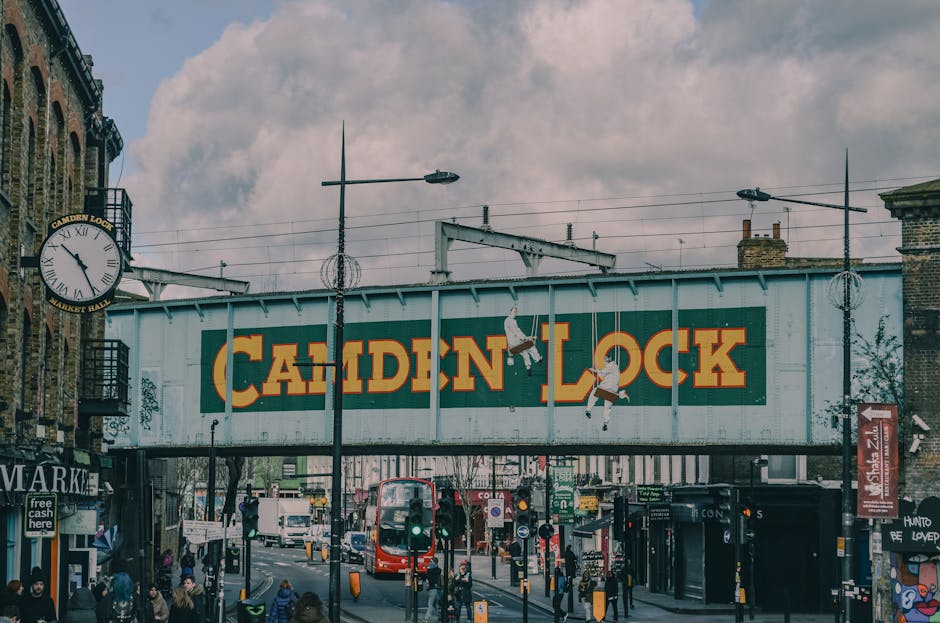
Camden Town Removals in Camden Town

Camden Town removals need careful planning, sensible packing and a clear approach to access, whether you are moving from a flat above a shop, a shared house or a compact office space. Our service is centred on practical moving support, with attention to the route out, the handling of furniture and the steady progress of the day. We help customers who want a straightforward move completed with careful handling and a sensible pace.
We work across home moves, single-item transport and larger household jobs, keeping the service flexible enough for different property types and contents. If you are comparing options, our move planning can be discussed alongside pricing and quotes, so you can make a clear decision before anything is booked. The aim is simple: a removal service that matches the property, the load and the level of help you need.
For a Camden Town removal quote, tell us what needs moving, the addresses involved and any access points that could affect loading or carrying. A brief outline is usually enough to start. If your move includes awkward furniture, a narrow staircase or packed rooms, that detail helps shape the right approach. You can also call on us for plain-text advice before deciding how best to proceed.
Home moving support for different property types
Home removals are rarely the same from one address to the next, so the service should reflect the layout of the property and the kind of belongings being moved. A top-floor flat with tight stairs may call for a lighter packing approach and more careful staging, while a family house may involve a fuller load and more time spent on furniture protection. We keep the work focused on moving items out safely and into the next property with as little disruption as possible.
Our home moves page covers the broader domestic service, while related options such as house removals and house movers help customers looking for a house-focused move rather than a general transport option. Where the job is lighter and more direct, a van-based approach may suit better. We can discuss whether the move is best handled as a full household removal or as a smaller relocation task.
Handling furniture, boxes and fragile items
Good household removals are built around how items are packed and lifted. Sofas, beds, wardrobes, tables and boxed contents each need a slightly different approach, especially if the property has limited turning space or shared access. We focus on keeping the load organised, separating delicate pieces from heavier items and ensuring that the moving sequence is easy to follow. That matters just as much for a short move as for a longer one.
Packing and loading with care

Packing can make the difference between a smooth move and a stressful one. Our packing and unpacking services are useful when you want help preparing rooms before moving day, especially if cupboards, shelves and loose belongings need to be brought together in a controlled way. Proper packing also helps protect items during lifting and transit, and it makes unloading more organised at the new property. We keep the guidance practical rather than over-complicated.
In many cases, the best results come from a mix of customer preparation and moving support. A concise inventory, clear labelling and sensible packing materials all help, but we do not expect every customer to prepare rooms perfectly. The key details are the same: what is being moved, how fragile it is, and whether there are access limitations such as parking restrictions or narrow entrances. Those facts help shape the removal plan.
When comparing service options, some customers want a full packing service, while others only need careful loading and transport. If you are uncertain, a short discussion can clarify whether the job needs extra wrapping, furniture dismantling or a more minimal approach. For many domestic moves, the right balance is one that protects the items without overdoing the process.
Man and van support for smaller or lighter moves
Not every removal needs a full-size team and truck. A lighter move, a few bulky items or a short-distance relocation may be better suited to man and van support, which is often a practical option when the load is manageable and the access is straightforward. This style of service is also useful for people moving from smaller homes, student accommodation or temporary lets where the contents are limited but still need careful handling.
Related pages such as man with van, man with van removal and man and van removals describe the same broad idea in slightly different ways, and the best fit depends on the kind of move you are planning. What matters is not the label but the practicality of the transport, the carrying help required and whether items need to be moved directly or assembled into a larger load.
For some customers, a simpler service is the most efficient choice because it keeps the move direct and easy to schedule. For others, a fuller removal arrangement is better when furniture, boxes and appliances all need to go together. We can help you think that through without making the process more complicated than necessary. If you want a quote, the basic load description is the best place to start.
Commercial removals and office relocation
Moving workspaces with less interruption
Our commercial moving support covers offices and other business premises that need a practical relocation plan. The main aim is to move desks, chairs, files, equipment and stored items in an orderly way so the business can settle into its new layout efficiently. For many organisations, the best approach depends on whether the move involves a single room, a small suite or a more complete office relocation. Clear sequencing and careful handling are important at every stage.
We also offer office removals and office relocation services for customers who want a more specific commercial solution. Larger or more complex jobs may benefit from broader commercial moves support, especially when there are filing systems, equipment clusters or multiple work areas to manage. The service can be scaled to suit the size of the office and the type of contents involved.
Businesses often need a removal approach that respects building access, shared corridors and the order in which rooms should be cleared. That is why a good office move is usually planned around the layout rather than handled as a simple collection exercise. If you are arranging a workplace move, it helps to identify what needs specialist handling and what can be packed into standard boxes before the day begins.
Furniture pick-up and single-item transport

Some jobs are too small for a full house move but still need more than a standard parcel delivery. Our furniture pick-up service is designed for those situations, whether you need a sofa collected, a bed moved between addresses or a few larger items transported together. This can be useful for people who are furnishing a home gradually or moving only selected pieces from one property to another.
Single-item transport also works well when furniture is awkward to move alone. Heavy cabinets, wardrobes and white goods can present carrying challenges even when the distance is short. A careful pick-up service reduces the strain on customers and helps avoid damage to walls, doorframes and flooring. We focus on the route, the handling and the placement of the item at the destination.
Where items are large but the load is small, a practical moving van may be the best fit. Some customers combine furniture collection with other removal tasks, while others use it as a simple standalone service. Either way, the decision usually comes down to the item size, the number of floors involved and how much help is needed at each end.
Vehicles, vans and truck hire choices
The vehicle used for a removal should suit the job rather than the other way round. A compact van can be enough for a lighter load, while a larger removal vehicle may be more appropriate for a fuller household move or a mixed commercial load. We can help match the transport to the quantity and shape of the contents, so the move is neither under-resourced nor unnecessarily large.
Related service pages such as moving van, moving truck and removal truck hire reflect the different vehicle-based options available for a range of removal tasks. In some cases, a customer mainly needs transportation; in others, the emphasis is on the lifting and carrying support that comes with the vehicle. Choosing the right vehicle is an important part of keeping the move efficient and manageable.
Helpful details for a quote:
- the main items or rooms to be moved
- the collection and delivery postcodes
- any stairs, lifts, narrow entrances or loading limits
- whether fragile or oversized items need extra care
About Camden Town
Camden Town is a district in the London Borough of Camden, set in north London along the Regent’s Canal and close to the northern end of Camden High Street. Its identity has long been shaped by transport links, markets and a dense mix of residential and commercial streets. The area grew significantly in the nineteenth century after the arrival of the Regent’s Canal and later railway development, which helped turn it into an important urban centre rather than a small riverside settlement. Today, the neighbourhood is known for its busy streets, layered architecture and strong association with music, markets and independent retail. Camden Market, though made up of several adjoining market sites, is one of the best-known parts of the district and occupies former industrial and railway land that was adapted for trading use. The canal towpath adds a quieter contrast to the surrounding traffic, and the Lock area remains a recognisable landmark where bridges, waterside paths and historic buildings sit close together. Nearby public spaces and institutions contribute to the district’s character, including Regent’s Canal access points and the broader network of streets leading towards Kentish Town, Mornington Crescent and Primrose Hill. The area combines older terraces, commercial frontages and newer developments, with a street pattern that reflects its long urban history. Its cultural reputation is tied not only to shopping and nightlife but also to the everyday life of a well-established inner-London place with layered uses, changing architecture and constant pedestrian movement.
Planning the move and agreeing the details

A well-organised removal is easier when the main details are clear from the start. That includes access at both addresses, the number of rooms involved, any large furniture and whether there are items that need special care. You do not need a long checklist to begin; a concise description is often enough to set the work in motion. The more accurate the outline, the easier it is to match the service to the move.
We also help customers think about the timing and sequence of the job. If packing is still underway, that may affect the collection order. If lift access is shared or if parking is limited, that may change how loading is arranged. A good removal service takes those practical points into account without turning the move into an overcomplicated project. Simple information, given early, keeps the day more predictable.
For a clearer understanding of costs and service scope, the most useful starting points are the job size, the access conditions and whether extra handling is needed for furniture or fragile pieces. Pricing and quotes can be discussed once those points are known, and that makes the quotation more relevant to the actual move rather than a rough guess. If you are ready to proceed, send a brief outline and we can take it from there.
Service standards, care and practical support
Removal work is not only about transportation; it is also about how the belongings are treated between collection and delivery. Protective wrapping, sensible stacking and careful carrying all help reduce the chance of scratches or breaks. We approach each move with a view to keeping the load stable and the route efficient, especially where hallways, stairs or tight turns make the job more demanding. The emphasis stays on steady, responsible handling.
Our broader service range includes removal services, removals, removal company and removal companies pages for customers who want to compare the different ways removal work can be described. We also reference general support such as movers and removals near me where customers are looking for a straightforward local move. The important point is to choose a service that genuinely matches the move rather than a name that sounds familiar.
If your belongings include mixed household and office contents, or if your move involves items that cannot simply be boxed and carried, it is better to mention that early. That allows the removal plan to reflect the real shape of the job. Careful planning matters, but the practical delivery should remain simple and direct.
Getting a quotation and arranging next steps

When you are ready to request a quotation, the best approach is to share the main details in one go: what needs moving, where it is going, and whether there are any access or handling issues. That is usually enough to produce a more useful response than a vague enquiry. If you are comparing removal options, we can also explain how the service changes between a smaller van move, a fuller household removal and a commercial relocation.
Customers often find it helpful to decide first whether they need full moving support or a simpler transport-only arrangement. From there, the quotation can reflect the real workload, including loading time, furniture size and the amount of packing already done. If there are fragile items, awkward stairs or several collection points, those should be mentioned in the same message so the quote is based on the actual job rather than assumptions.
To take the next step, send your move details and ask for a quotation. If you prefer to talk through the options first, that is fine too. A short, clear enquiry is often the quickest route to a sensible answer, and it helps ensure the service is matched to the move from the outset.